
Search
 |
Cheese Knowledge |
|
|
|

Adobe Download
 |

- Cheddar
- Colby Jack
- Monterey Jack
- Muenster
- Pepper Jack
-Queso Blanco
-White Cheddar
Heritage
Brick is a Wisconsin original, first made by John Jossi around 1877. Some Brick cheeses resemble Germany’s surface-ripened Beer Cheese or Beer Käse. Brick was named for its shape and because cheesemakers originally used bricks to press the moisture from the cheese. Wisconsin leads the nation in the production of Brick and surface-ripened Brick. The bacteria that cheesemakers apply to surface-ripened cheeses, known as a smear, develops the full, earthy flavor.
Description
A Wisconsin original. Flavor changes from mild and sweet with a touch of nuttiness when young to pungent and tangy when aged. surface-ripened with smooth, open texture.
Appearance
Ivory to creamy yellow
Serving Suggestions
Mild Brick makes excellent macaroni and cheese, potatoes au gratin or hash browns with cheese. Aged Brick adds flavor to all types of sandwiches. Try mild Brick with sautéed onions and stone ground mustard on rye bread, with pickled vegetables on the side. Top toasted Italian bread with asparagus, ham and Wisconsin Brick; broil and serve open face
 Heritage
Fontina originated in Italy in 1477 in the mountainous Val d’Aosta region near the Swiss border. It was named Fontina d’Aosta for Mont Fontin and the nearby village of Fontinaz. Fontina is considered to be one of the most versatile cheeses in the world because it is excellent as both a table cheese and a cooking cheese. Fontina has been copied often; the most notable versions are the Italian-style, Swedish-style and Danish-style. Today, Wisconsin cheesemakers produce all three varieties.
Description
Made in 3 styles: DANISH: slightly tart, nutty, mild earthy flavor; mellow to sharp depending on age. Red waxed. SWEDISH: slightly tart, nutty, mild earthy flavor; mellow to sharp depending on age. Red waxed... ITALIAN: mild, earthy, buttery flavor. Smooth, supple texture with tiny holes. Brown coating.
Flavor
Danish-style and Swedish-style: slightly tart, tangy, nutty, light earthy flavor; mellow to sharp depending on age Italian-style: mild, earthy, buttery
Heritage
Originally, Italians ate Mozzarella as a soft fresh cheese. Later, cheesemakers made it with lower moisture to give it a longer shelf life. After World War II, GIs returned home with a taste for a delicious new food they had discovered in Italy – pizza. Today, thanks in large part to these soldiers, Mozzarella rates second only to Cheddar in popularity in the United States. Wisconsin cheesemakers produce close to 650 million pounds of this Pasta Filata cheese each year. Pasta Filata refers to the process in which the curds are dipped in hot water and then stretched and kneaded into parallel strands. This allows Mozzarella to melt and flow and gives it its characteristic stretch.
Description
Delicate, milky flavor. Smooth, plastic texture. Whole milk Mozzarella richer in taste. Excellent melting properties. Part-skim Mozzarella browns faster. String cheese similar to Mozzarella, but formed into strips for snacking.
Appearance
Creamy white, smooth

Heritage
Historians believe that Muenster originated in Alsace, France. Others give the honor to its neighbor, Germany. In Wisconsin, Muenster was among the first semi-soft cheeses European immigrants made in the late 1800’s, and Americans quickly developed a taste for it. Wisconsin Muenster tastes milder, and the firmer texture helped it gain popularity as a slicing cheese for sandwiches.
Flavor
Mild to mellow, faint aroma, savory; creamier with age
Serving Suggestions
Add a new twist to toasted cheese sandwiches or to your next cheeseburger. Muenster melts superbly on top of casseroles or pizza. Combine avocado slices, shredded Muenster, olives, hard boiled eggs, green onions and celery. Serve in pita bread pockets.

Heritage
Gouda and Edam originated in Holland over 800 years ago. The name "Gouda" comes from a village in southern Holland. The town of Edam shares the same valley. In the early days of Dutch cheesemaking, cheesemakers wrapped Gouda for export in red cloth to identify the variety. Today, some Wisconsin producers carry on the tradition by covering the cheese with red wax or cellophane.
Description
Whole milk variety with rich, buttery, slightly sweet flavor and smooth, creamy texture. Develops complex caramel flavor, firmer texture when aged. Dutch origin. Available Smoked or Plain.
Serving Suggestions
Use smoked Gouda as a flavorful partner with grilled, sliced turkey or chicken in a hot sandwich. Gouda melts well and it’s great in casseroles. Layer fresh apples and slices of Gouda in a baking dish, sprinkle with sugar-cinnamon crumb mixture and bake.
Heritage
Edam and Gouda originated in Holland over 800 years ago. The name "Edam" comes from a town of the same name in southern Holland. The village of Gouda shares the same valley. Originally, cheesemakers shaped Edam into balls to roll down the gangplanks into ships for export. Since Edam has a firmer texture than Gouda, it maintained its round shape.
Description
Part-skim milk variety with light, buttery, nutty flavor and smooth, firm texture. Dutch in origin.
Heritage
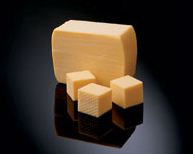
Havarti, a milder version of German Tilsit, was first made popular in Denmark. Many cheesemakers in Wisconsin produce a product similar to its Danish cousin.
Description
Buttery, slightly acidic flavor. Available plain and flavored. Smooth, supple texture with tiny holes. It is a table cheese that can be sliced, grilled, or melted.

Description:
Provolone is an Italian cheese that originated in Southern Italy. It is slightly piquant when young becoming sharper as aged. Firm texture becomes granular with age. Wisconsin cheesemakers produce smoked and unsmoked Provolone. Producers originally tied rope around Provolone to hang it in the curing rooms. The rope also came in handy for transporting the cheese on horseback.

Description
Mild when young becoming sharp, buttery and nutty when aged. Similar to blend of aged Cheddar and Parmesan flavors. Texture changes from elastic and firm to hard and granular with age.
HeritageAsiago derives its name from a small town in northern Italy. In Italy, Asiago usually means Asiago Fresco (fresh), which has a mild flavor and semi-hard texture. In Wisconsin, cheesemakers age Asiago to develop sharper flavors. It resembles a cross between sharp white Cheddar and Parmesan.
Serving Suggestions
Grate Asiago over lavosh, focaccia and other flat bread dough and bake as usual. Grate over salads, soups, vegetables, pasta and pizza. Try topping seafood with grated Asiago, then broil. Aged Asiago makes a wonderful dessert cheese when served as is with walnuts and dried apricots.

Cheese Knowledge:
A popular cheese that originated in ancient times. Cheddar cheese was first made in Cheddar, a village in southwest England, and historical records indicate that the cheese has been made since at least the 1100s. A (semi)firm, cow's milk cheese that ranges in flavor from mild to sharp and in color from a natural white to pumpkin orange. Orange cheddars are colored with annatto, a natural dye. Cheddars vary in flavor depending on the length of aging and their origin.
As cheddar slowly ages, it loses moisture and its texture becomes drier and more crumbly. Sharpness becomes noticeable at 12 months (old cheddar) and 18 months (extra old cheddar). The optimal aging period is 5-6 years; however, for most uses three-year-old cheese is fine and five-year-old cheddar can be saved for special occasions.
Fact:
• Cheddar Cheese is the most widely purchased & eaten cheese in the world!
• A Wisconsin Cheddar cheese of 34,951 lb (15,853 kg) was produced for the 1964 New York World's Fair. It required the equivalent of the daily milk production of 16,000 cows.
• White House historians assert that U.S. President Andrew Jackson held an open house party where a 1,400 lb (635 kg) block of Cheddar cheese was served as 'refreshment'.
• Cheddar cheese is the most popular cheese in the United Kingdom, accounting for 51% of the country's £1.9 billion annual cheese market.
~Wikipedia
Handling & Storage:
Can be frozen if cut into small 1/2-pound chunks, and wrapped in airtight packaging. Thaw in the refrigerator, and use soon thereafter.
Substitutions:
• Colby
• Monterey Jack
Favorite Pairings:
• Deli Meats
• Sandwiches
• Burgers, Grilled Cheese, etc.
• Apples
• Sharp Cheddar
• Cabernet
• Rioja
• Sauvignon Blanc
• American Amber/Red Ale Beers
• American, Belgian, & English IPA Beers
• Champagne
• Chardonnay
Cheese Knowledge:
 |
|
Substitutions:
Parmesan
Popular Recipes:
Applebee’s Hot Artichoke & Spinach Dip
www.food.com/recipe/copycat-applebees-hot-artichoke-and-spinach-dip
Mama Luliucci’s Spaghetti Sauce
www.food.com/recipe/my-mama-iuliuccis-dont-skip-a-step-spaghetti-sauce

Cheese Knowledge:
Cheese curds are little known in locations without cheese factories, because they should ideally be eaten within hours of manufacture. Their flavor is mild, with about the same firmness as cheese, but with a springy or rubbery texture. Fresh curds squeak against the teeth when bitten into, a defining characteristic, due to air trapped inside their porous bodies. They are sometimes referred to as "squeaky cheese". They are sometimes somewhat salty. The American variety is usually yellow or orange, like most American Cheddar cheese. Other varieties, as in Quebec or New York State, can be paler.
~ Wikipedia
Favorite Recipes:
• Fresh and Raw!
• Deep-Fried
Cheese Curds Recipe PDF
Cheese Knowledge:
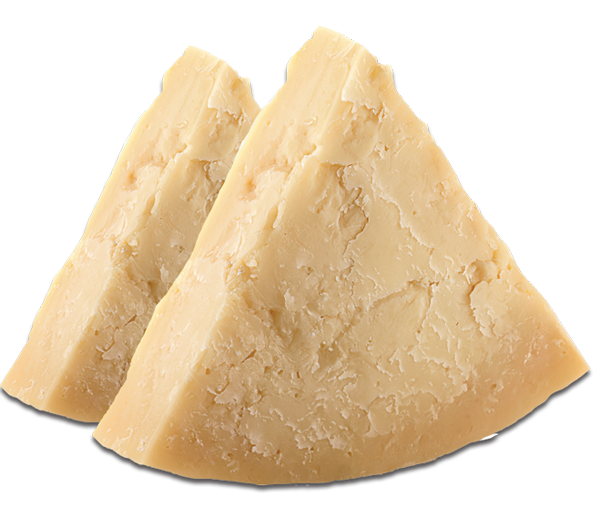
Known as the king of Italian cheeses, Parmesan originated in the Reggio and Parma regions of Italy. It tastes sweet, buttery and nutty which intensifies with age.
History/Facts:
According to legend, Parmigiano-Reggiano was created in the course of the Middle Ages in Bibbiano, in the province of Reggio Emilia. Its production soon spread to the Parma and Modena areas. Historical documents show that in the 13th-14th century Parmigiano was already very similar to that produced today which suggests that its origins can be traced to far earlier.
It was praised as early as 1348 in the writings of Boccaccio; in the Decameron, he invents ‘a mountain, all of grated Parmesan cheese’, on which ‘dwell folk that do nought else but make macaroni and ravioli, and boil them in capon's broth, and then throw them down to be scrambled for; and hard by flows a rivulet of Vernaccia, the best that ever was drunk, and never a drop of water therein.’[2]
During the Great Fire of London of 1666, Samuel Pepys buried his ‘Parmazan cheese, as well as [his] wine and some other things’ in order to preserve them.[3]
In the memoirs of Giacomo Casanova, he remarked that the name "Parmesan" was a misnomer in his time (mid-18th century) as the cheese was produced in the town of Lodi, not Parma. This comment originates probably from the fact that a grana cheese very similar to the "Parmigiano", the Grana Padano, is produced in the Lodi area.
~ Wikipedia
Favorite Pairings:
• Cabernet Sauvignon
• Pinot Noir
Popular Recipes:
Creamy Parmesan Cheese Sauce
www.food.com/recipe/creamy-parmesan-cheese-sauce
Ultimate Crab & Spinach Manicotti with Parmesan Cheese Sauce
www.food.com/recipe/ultimate-crab-and-spinach-manicotti-with-parmesan-cheese-sauce
Baked Butternut Squash and Parmesan Cheese Gratin
www.food.com/recipe/baked-butternut-squash-and-parmesan-cheese-gratin
Mashed Potatoes with Prosciutto & Parmesan Cheese
thanksgiving.food.com/recipe/mashed-potatoes-with-prosciutto-and-parmesan-cheese
Cheese Knowledge
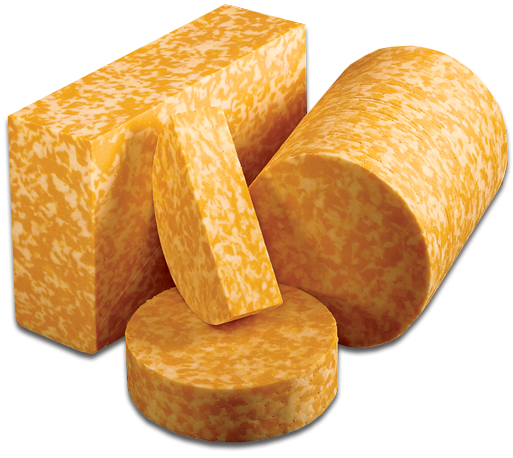
Jacko is produced from a mixture of Colby and Monterey Jack cheeses. Its generally eaten when it is still young and mild in flavor. The cheese has a semi-hard texture. The flavor of Colby-Jack is mild to mellow. The cheese is high in calcium.
~ Wikipedia
Favorite Pairings:
• Cheese Trays
• Salads
• Sandwiches
• Casseroles
• Soups
• Sauces
Cheese Knowledge:
Monterey Jack is an American semi-hard cheese made using cow’s milk. It has a delicate, buttery, slightly tart flavor. Available plain and flavored. This creamy cheese lends itself well to peppers and spices. Mullins offers an assortment of spiced Monterey Jack including jalapeno pepper, habanero pepper, dill, beer flavored, tomato basil, pesto, and buffalo wing.
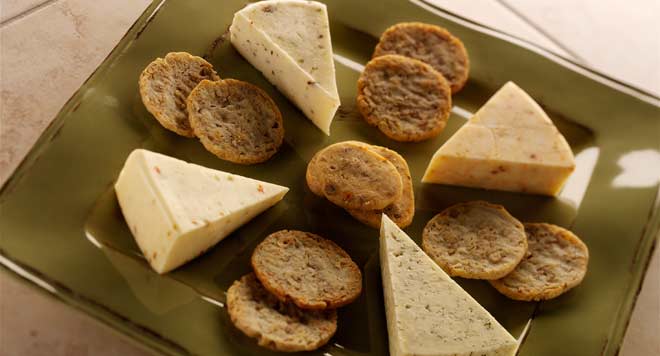
- Garlic - Chipotle - Habanero - Jalapeño - Dill - Salsa - Buffalo Wing - Tomato Basil - Beer - Pesto -
History/Facts:
In its earliest form, Monterey Jack was made by the Mexican Franciscan friars of Monterey, California, during the 1800s. California businessman David Jack first began to mass market the cheese. He produced a mild, white cheese, which came to be known as "Jack's Cheese", and eventually "Monterey Jack".
~ Wikipedia
Substitutions:
• Muenster
• Gouda
• Havarti
Favorite Pairings:
• Mexican Inspired Meals – Tacos, Burritos, Enchiladas, Fajitas, Chimichanga’s, etc.
• Quesadilla’s
• Grilled Cheese Sandwiches
Recipes:
Monterey Jack Chicken Bursting with Flavor
www.food.com/recipe/monterey-jack-chicken-bursting-with-flavor

Cheese Knowledge:
The flavor of Colby cheese is often compared to cheddar, but the cheese is much more mild and creamy. Colby also has a high moisture content, and it tends to be much softer than cheddar. The cheese is manufactured with a washed curd process, and is not subjected to cheddaring, as is the case with cheddar cheese. Washing reduces the acid content, making Colby cheese less tangy when it is finished.
~ wisegeek.com
History/Facts:
• Joseph F. Steinwand in 1874 developed a new type of cheese at his father's cheese factory near Colby, Wisconsin. The cheese was named after the village, which had been founded three years earlier.
• An 1898 issue of the "Colby Phonograph" noted that "A merchant in Phillips gives as one of the 13 reasons why people should trade with him, that he sells the genuine Steinwand Colby Cheese." After the turn of the century Wisconsin became known as one of the great cheese producing centers in the United States.
~ Wikipedia
Handling & Storage:
• The gentle, mild cheese does not age well, tending to become cracked and dry. It should be eaten as young as possible, making it an excellent choice of cheese for commercial production since dairies do not need to invest in a large aging area for finished cheeses. Certain high quality Colby cheese may be aged, but the majority of the cheese is sent directly to market.
Substitutions:
• Mild Cheddar
Favorite Pairings:
• Zinfandel, Syrah, & Shiraz wines
• Tangy Rye Bread
• Apples
• Pears
• Grilled Sandwiches
Popular Recipes:
Hash Browns Casserole
www.food.com/recipe/hash-browns-casserole
Baked Cheese Spread
www.foodnetwork.com/recipes/paula-deen/baked-cheese-spread-recipe
Salsa Mac & Colby Cheese
http://www.food.com/recipe/salsa-mac-colby-cheese-213458
“Mullins Whey… Whey the Advantages!”


Description
Mullins Whey Protein Isolate is derived from sweet dairy whey using cold microfiltration and ultrafiltration membrane technology to produce undenatured whey protein isolate. Whey Protein Isolate provides a higher concentration of nutritional proteins found useful for…
Some Whey Facts:

• Whey is nature’s perfect protein – Boasting a 104 Biological Value (BV)(BV is the ability of the body to use the nutrients. The higher the number the more useful by the body. Our whey protein has a higher BV than an egg(93)!)
• Whey rich in amino acids
• Whey low in calories
• Whey good for weight management – Lots of protein keeps you full longer
• Balanced source of essential amino acids & peptides
• High protein efficiency ration
• Excellent source of sulfur amino acids
• Excellent source of branched-chain amino acids
• Excellent source of glutamine
Whey Benefits:
Sport Performance
• Acts as an excellent source of energy for prolonged workouts.
• Suppiles a number of essential amino acids crucial to building and maintaining muscle mass, as well as a quick recovery
 |
 |
Health & Wellness

• Whey protein is an appetite suppressant, great for weight management and low carb diets.
• Whey proteins are known to provide immune boosting components that aid in the prevention and recovery of certain degenerative diseases such as cardiovascular problems, arthritis, and certain cancers.
• Whey proteins provide valuable amino acids important to muscled development. Not only is it usefule to bodybuilders and athletes, but it is just as beneficial to individuals experiencing the stresses of injury rehabilitation of any kind.


Useful Resources
• www.usdec.org > Products > Whey > Nutrional Information
• www.iloveindia.com/nutrition/protein/whey-protein.html
Suggested Uses
• Add 1-2 scoop(s) (1 scoop recommended per serving for average user 2-to3 times per day) to 8 fl. Oz. of your favorite beverage and stir slowly or blend in a healthy shake. Tastes best when mixed with any kind of juice, preferably non-carbonated. You can also add a desired amount to cold/hot cereal or incorporate into many other food applications.
Nutritional Information


